
Give AI a clear brief
You have chosen a safe, bounded task. Now you need to tell the assistant what a useful result looks like. A clear brief makes your expectations visible: what to do, who the result is for, which facts to use, what to preserve and how to present the answer.
In this module, you will write a brief for the fictional Willow Team’s workshop update, inspect the response and improve one part of the brief. You will keep both attempts so you can explain what changed.
What you will learn
By the end, you will be able to:
- Write a brief with a task, audience and purpose, source material, constraints, output format and checks.
- Separate your instructions from the material the assistant should use.
- Specify how to handle missing information without asking the assistant to guess.
- Compare two responses against the same criteria and make a focused revision.
Before you start
Complete Module 1 first, or check that you can choose a low-risk task, recognise unsafe input and compare a short response with its source. Keep the prompt you wrote in Module 1 nearby if you have it.
Use an approved ordinary text-chat assistant and a document or notebook for your work. All practice material is fictional. You do not need a paid subscription, file upload, coding tool, connected app or web search inside the assistant. Nothing in this module is sent to a real colleague.
Plan for about 75 minutes: five lessons and demonstrations, 30 minutes; guided practice, 20 minutes; independent practice, 15 minutes; self-check and review, 10 minutes. These are planning estimates rather than measured completion times.
Continue the workshop scenario
You support the fictional Willow Team preparing a community workshop. The coordinator needs to scan a short internal update and see what has progressed and what still needs confirmation.
Each source pack below is a separate practice snapshot. Use only the pack named in your current task. Do not combine it with notes from Module 1 or a different exercise.
All example responses in this module are illustrative teaching examples, not recorded live-tool results. Your wording may differ. Judge the meaning and requirements, not whether it matches the example exactly.
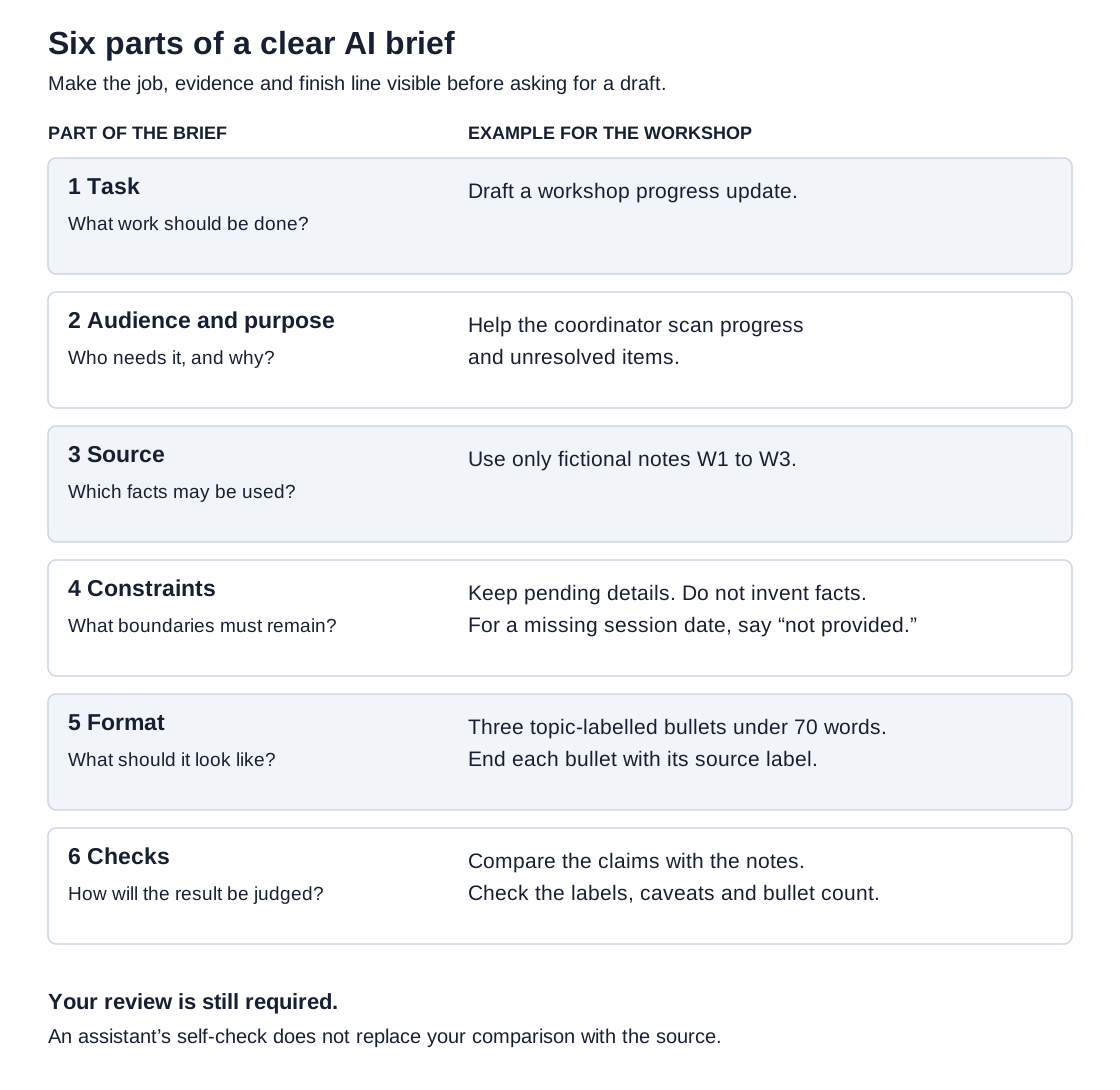
Read the diagram explanation
An annotated brief connects each of six components to a question and an example: task, audience and purpose, source, constraints, format, and checks. A footer reminds learners to inspect the response themselves.