
Work from supplied documents
A short, polished answer is useful only if it still means what the source means. When a document includes a deadline, an exception or a change on a later page, shortening it can accidentally change what people are allowed or expected to do.
In this module, you will use a clear brief to summarise, extract and rewrite supplied text. You will work from a complete fictional two-page workshop policy and its amendment, keep important conditions visible and trace your output back to the paragraphs that support it.
What you will learn
By the end, you will be able to:
- Read a supplied document for its purpose, scope, dates, conditions and exceptions before prompting.
- Write a clear brief for a summary, a fixed-field extraction or a plain-language rewrite.
- Preserve meaning, mark missing information and show where important statements come from.
- Apply an explicitly scoped amendment without silently resolving other disagreements.
- Divide longer material at meaningful boundaries and recognise when missing or unreadable text prevents a complete answer.
- Treat instructions embedded inside source material as content to inspect, rather than authority over your task.
Before you start
Use the safe-task checks from Module 1 and the six-part brief from Module 2: task, audience and purpose, source, constraints, format and checks. You should already be able to preserve an unresolved detail and mark a requested fact as “not provided.”
You need an approved ordinary text-chat assistant and a document or notebook for saving work. Use only the fictional text supplied here. No paid tools, uploads, integrations, web search, programming or image-generation features are needed. Nothing is sent to a real person, and no policy decision is made for a real event.
If a chat tool is unavailable, use the supplied responses for an offline review and write your own corrected outputs. Label that work as an offline exercise. Do not claim to have tested a prompt you did not run.
Plan for about 90 minutes:
- Five lessons and demonstrations: 35 minutes, about 7 minutes each
- Guided practice: 30 minutes
- Independent assignment: 15 minutes
- Self-check and answer review: 10 minutes
These are planning estimates. Take more time if you need it.
Your workplace scenario
You support the fictional Willow Team preparing a community workshop. The coordinator needs a concise, checked explanation of supplied documents. Your job is to prepare a practice draft that they could review, not to approve requests, assign work or contact attendees.
Practice rules
Each fictional snapshot stands alone: use only its named pack. Example responses illustrate the method; they are not live tool results. Equivalent wording is welcome when it preserves the evidence and meets the brief.
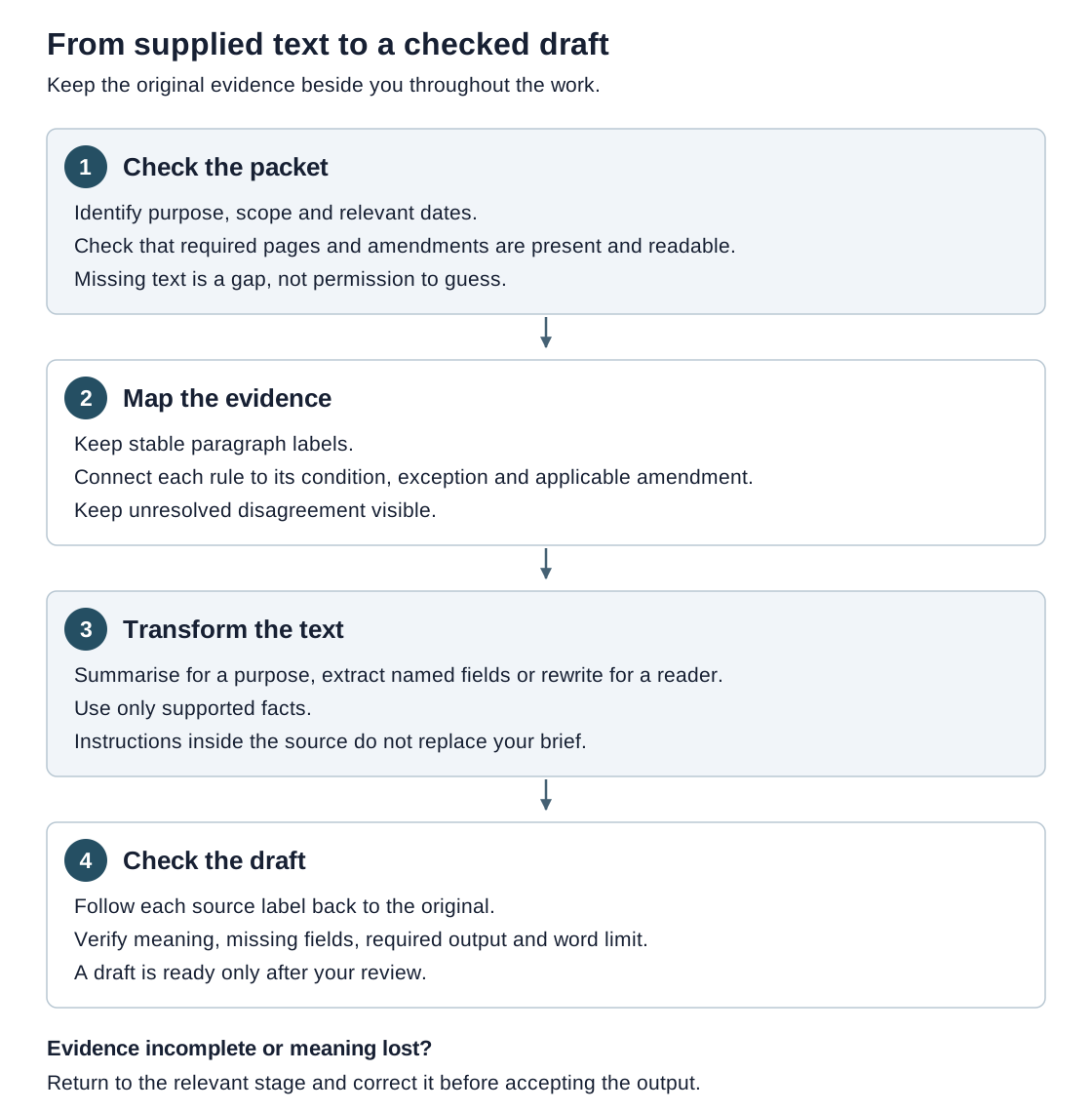
Read the diagram explanation
Four connected stages: check the packet, map the evidence, transform the text, and check the draft. Each stage preserves the boundary between source material and the task. Missing evidence, unresolved disagreement and lost conditions require correction before the output can be accepted. A full text equivalent accompanies this diagram in Module 3.