
Build a repeatable manual workflow
You can now choose a safe task, write a brief, work from evidence, check claims and prepare useful outputs. This module joins those skills into a small process that another person could follow.
Your result will be a one-page working procedure and two honest run records. You will use the procedure on two different fictional workshop packs and check that the second result reflects the second pack.
What you will learn
- Describe a manual workflow with a start, ordered steps, outputs and a human reviewer.
- Save the input checklist, brief, output requirements and review rules needed to repeat it.
- Decide when to correct a draft, continue with a labelled unknown, or stop.
- Test a normal case and a changed-input case without carrying over old facts.
- Record actual observations rather than claiming unmeasured time savings.
Before you start
Use the skills from Modules 1 to 6. You should be able to trace a claim to supplied text, preserve missing owners and dates, check a simple quantity and distinguish a draft from permission to send it.
Use an approved text-chat assistant, a text editor and a calculator if needed. All inputs below are fictional. No account connection, scheduled run, coding or paid feature is needed.
Plan for about 90 minutes: 30 minutes of explanation and demonstration, 50 minutes of practice, and 10 minutes of checks. The estimate excludes breaks and tool waiting and has not been validated by a beginner pilot.
The Willow Team scenario
You prepare an internal weekly update for the fictional team arranging a community workshop. For each run you need a short update, an action list, a draft message and a record of your checks. You will not send the message or change any real system.
The packs in this module are separate practice snapshots. Do not import facts from earlier modules. All sample outputs and completed records shown here are illustrative, not evidence of a live tool run.
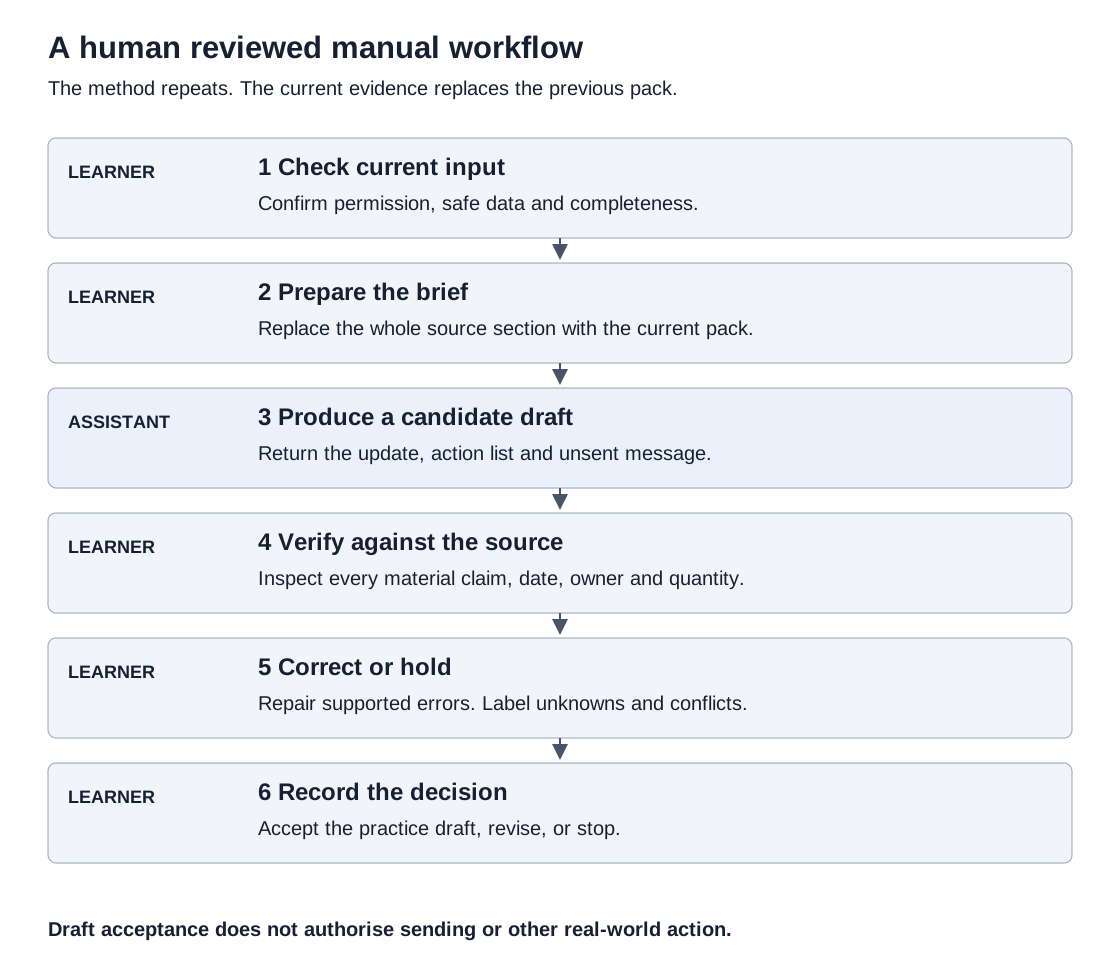
Read the diagram explanation
The learner inspects the input and submits a brief. The assistant drafts. The learner verifies, corrects, records unresolved items and makes an explicit decision before any use.